
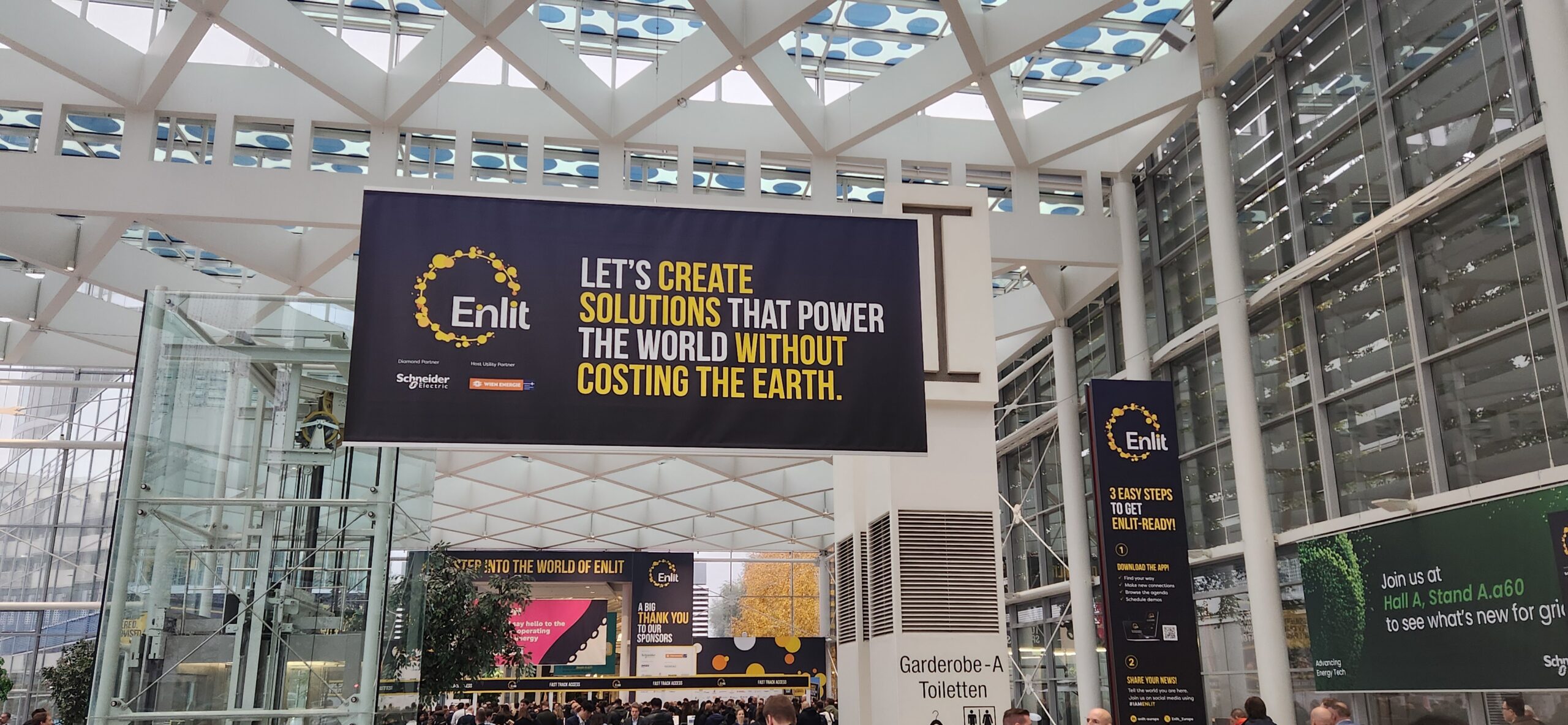
ORION at Enlit Europe 2026: Integrating Energy Futures in Vienna
Enlit Europe 2026 took place in Vienna, Austria, from 10 to 12 November, bringing together those shaping the transition across borders and sectors, with the aim of moving Europe towards a decarbonised and digitalised energy system that delivers clean, affordable and reliable energy. ORION took part in the event as part of a cluster of EU-funded projects under the shared theme Integrating Energy Futures, with a presence at the EU Projects Zone booth and in a dedicated speaker session.
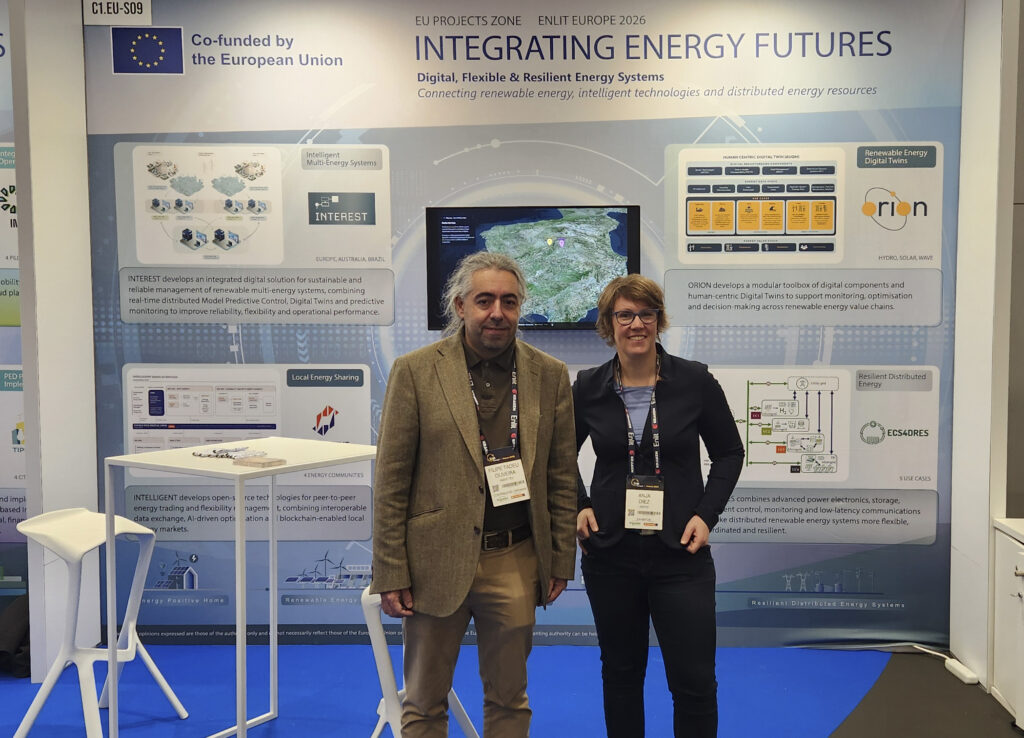
The Integrating Energy Futures cluster was spread across two booths. Booth C1 EU-S08, Smart Communities & Positive Energy Districts: Digital Solutions Connecting Buildings, Mobility and People, featured the projects InterPED, PEDvolution, ExPEDite, BiPED and TIPS4PED. ORION was based at Booth C1 EU-S09, Connecting Renewable Energy, Intelligent Technologies and Distributed Energy Resources, together with POSIFIT, INTELLIGENT, INTEREST and ECS4DRES.Over the three days, the booth welcomed a varied audience of energy industry stakeholders, researchers and students. Many of them were interested in learning about ORION and what it does, which led to valuable conversations about the project and its digital tools.
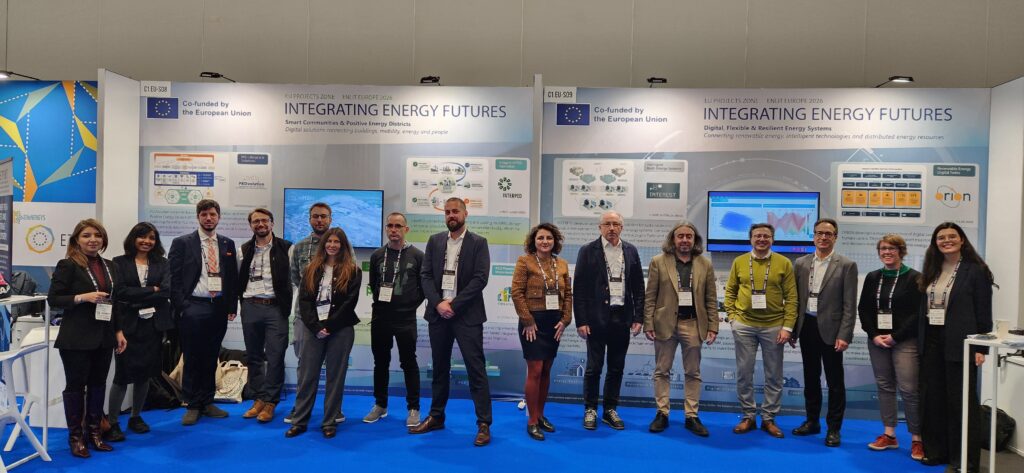
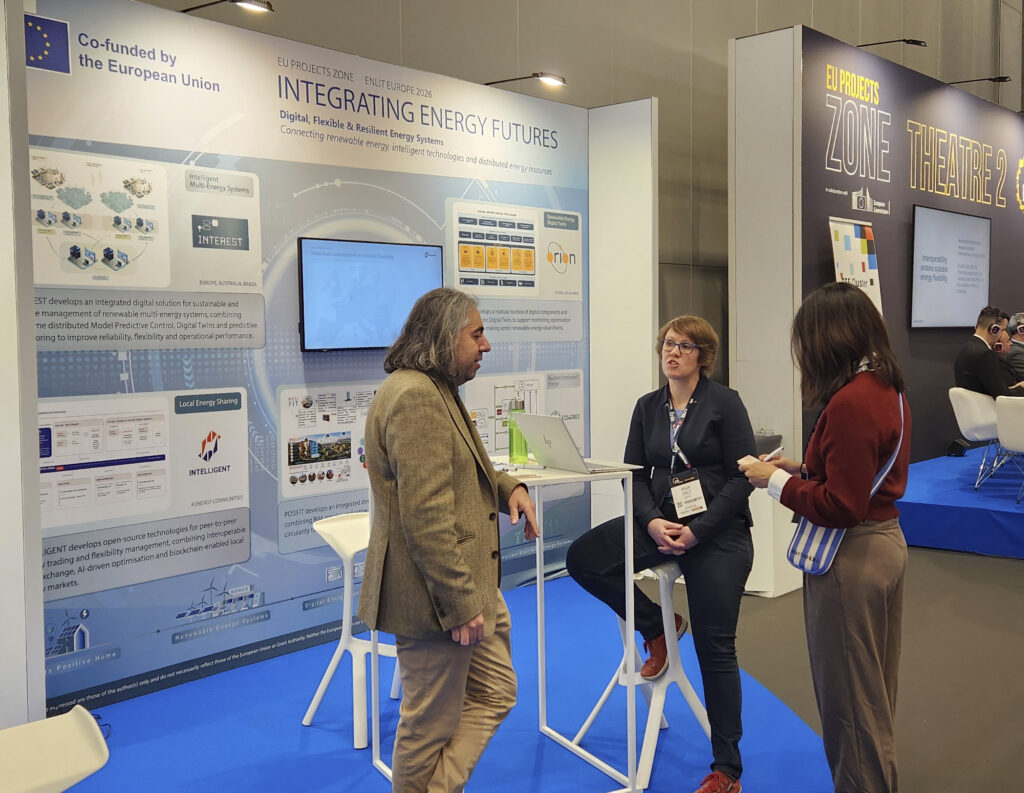
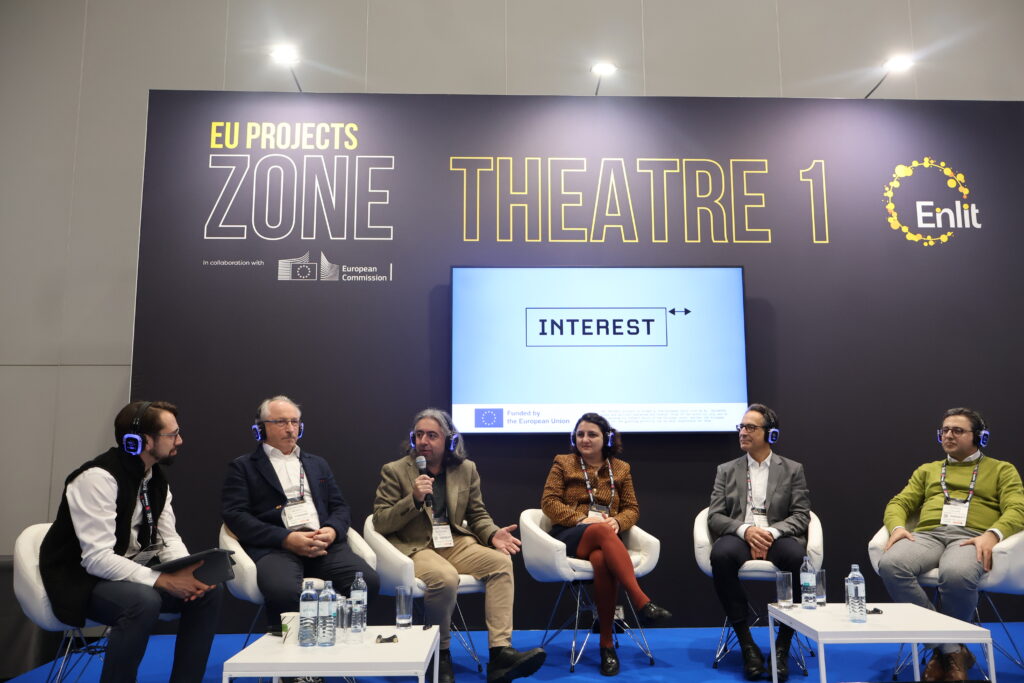
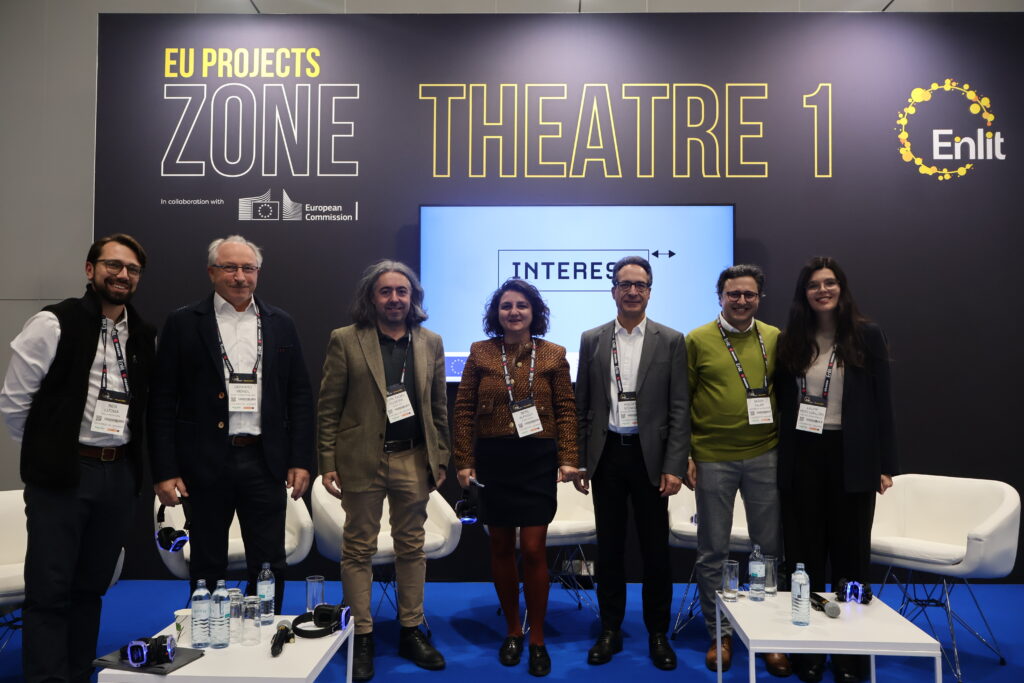
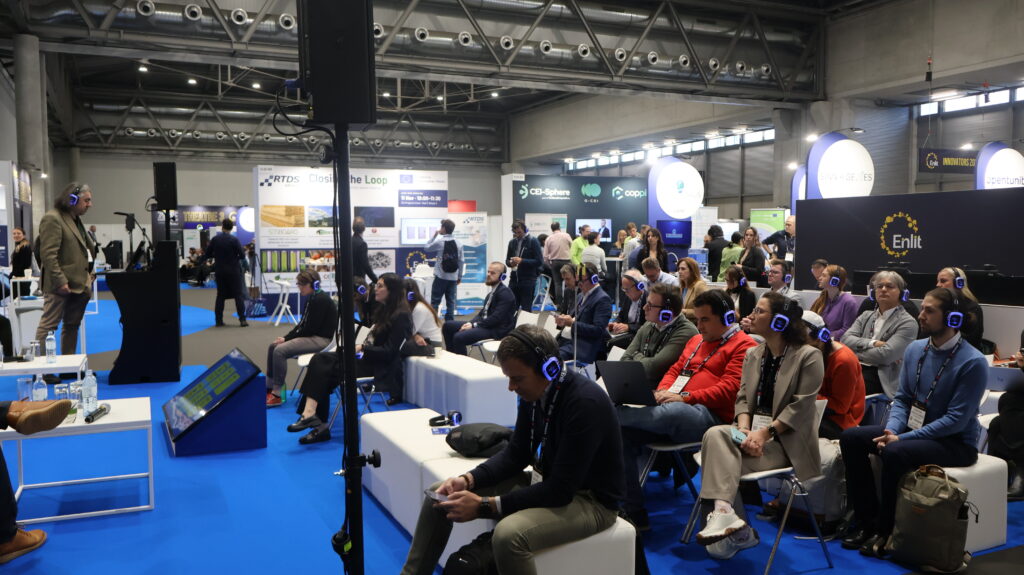
On 11 November, ORION joined the session “Integrating Energy Futures: Digital, Flexible & Resilient Energy Systems – Connecting Renewable Energy, Intelligent Technologies and Distributed Energy Resources”, held at EU Projects Zone Hub 1 (Hall C). Moderated by Ben Loma (POLIC), the session brought together the Booth #09 projects, with each speaker giving a five-minute presentation of their project. ORION was represented by Filipe Tadeu Oliveira , alongside Beril Alpagut (POSIFIT), Laura Perez Caballero and Saber Talari (INTELLIGENT), Gerhard Meindl (INTEREST) and Holger Schmidt (ECS4DRES), with each speaker opening with a five-minute presentation in response to a question tailored to their project. The questions covered key challenges of the energy transition, from local energy trading and grid reliability to integrating renewables and storage and developing positive energy districts.
Each speaker gave a five-minute presentation of their project, followed by a round-table discussion in which each presenter was asked one question. The questions centred on how to make the energy transition work in practice, from integrating renewables, storage and local energy trading into the grid to overcoming the barriers to developing positive energy districts.
Filipe Tadeu Oliveira presented ORION’s approach. He explained that digital tools add real value when they connect operational data, physical assets and human judgement across the energy value chain. He also made clear that ORION’s digital twin is not a passive visual replica. Instead, the project is building a human-centric environment in which operators can ask questions, test “what-if” scenarios, identify emerging faults and use simulations for training as well as for day-to-day decision support.
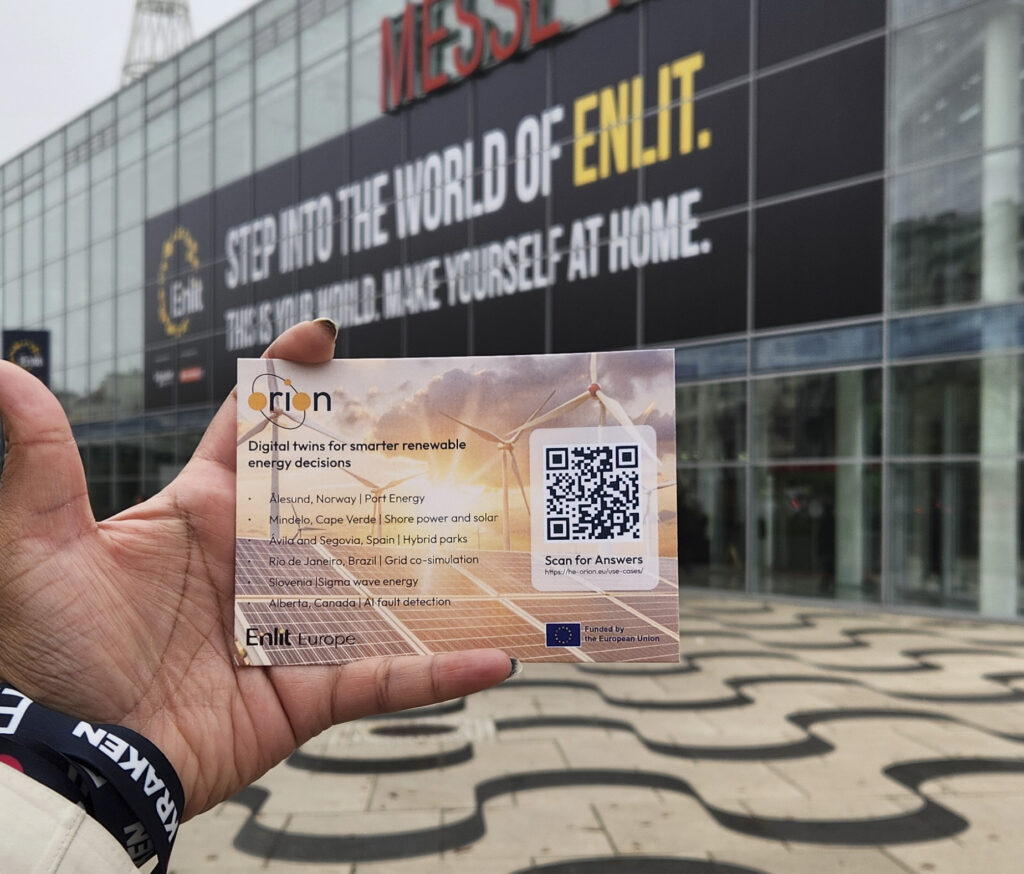
Oliveira also described the energy data space at the core of ORION, which brings together sensor readings, asset and transmission information, port stakeholder inputs, and operational and contextual data. Around it, ORION combines sensor technologies, interoperable data models, asset management and data-driven decision systems, with AI supporting tasks such as predictive maintenance. A key point of the presentation was that these modular tools must work across very different infrastructures rather than remain confined to a single demonstration. ORION’s use cases reflect this, ranging from shore-side electricity and renewable integration in ports in Cabo Verde and Norway to fault detection in Iberian photovoltaic farms, a Slovenian wave energy converter, distributed grid co-simulation in Brazil, and generation, transmission and distribution operations in Canada. To learn more about each of them, visit the ORION use cases page.
During the session and at the booth, ORION also presented a series of short videos of its use cases, offering visitors a first glimpse of the platform in action. The videos are available on the ORION YouTube channel: Watch the videos here.
Participation in Enlit Europe 2026 gave ORION a valuable opportunity to share its progress with the wider energy community, exchange ideas with fellow EU projects and connect with new audiences. The interest shown at the booth and during the session confirms the relevance of ORION’s human-centric approach to digitalising renewable energy value chains, as the project continues its work towards more flexible and resilient energy systems.